
When a United Nations agency, a multinational development bank, or a global trade body selects a production partner for a regional summit in Southeast Asia, the stakes are not abstract. A failed live stream in front of 3,000 delegates, or a brand film that misrepresents an organization’s mandate, carries real reputational cost. The vendor selection process these organizations follow is far more rigorous than most local production houses anticipate. Understanding that process, and what separates qualified contenders from easy rejections, is essential for any team evaluating corporate video production Malaysia options for high-stakes international work.
Table of Contents
- Quick Takeaways
- Why Asia Is the Focus for International Event Production Right Now
- The Vendor Evaluation Framework International Bodies Actually Use
- Technical Requirements That Eliminate Most Vendors Immediately
- Why Malaysia Is Emerging as a Serious Production Hub for Global Events
- Comparison of Procurement Approaches Used by International Organizations
- What Corporate Event Planners Get Wrong When Briefing a Production House
- Frequently Asked Questions
- References
Quick Takeaways
| Key Insight | Explanation |
|---|---|
| Compliance documentation is a hard filter | International bodies require insurance certificates, data privacy compliance, and often ISO-aligned quality processes before a vendor even reaches the creative evaluation stage. |
| Multi-camera and live streaming capability must be proven, not promised | Organizations running hybrid or fully virtual events require demonstrated multi-feed production experience, not just a claim on a website. |
| Malaysia’s timezone and infrastructure give it a real advantage | UTC+8 aligns with both East Asian and South Asian business hours, and Kuala Lumpur’s venue infrastructure reduces logistical risk for regional events. |
| A single point of contact is a procurement requirement, not a preference | Global bodies do not manage five separate sub-contractors. They require an integrated production house that owns the full scope from pre-production to post. |
| Portfolio relevance outweighs portfolio volume | One documented case study of a 500-person international conference is worth more in an RFP response than ten commercial brand films. |
| Multilingual captioning and translation support is a differentiator | Events for UN agencies, ASEAN bodies, or development banks often require content in multiple languages, and most regional vendors cannot deliver this in post-production. |
| Content repurposing scope is evaluated upfront | International organizations expect event footage to become promotional videos, explainer videos, and social cuts. Vendors who pitch only event coverage are leaving scope on the table. |
Why Asia Is the Focus for International Event Production Right Now
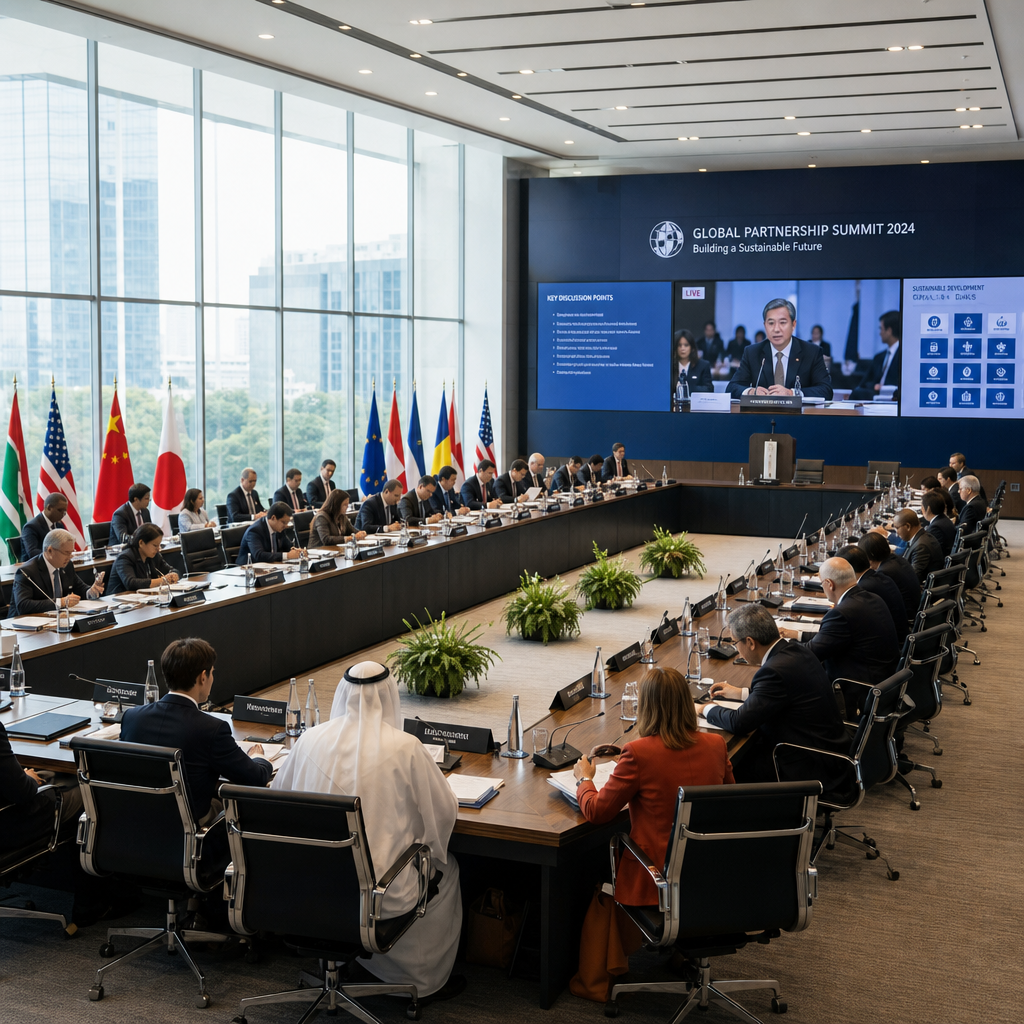
The center of gravity for international institutional events has shifted eastward over the past decade. ASEAN summits, Asian Development Bank forums, WHO regional consultations, and global trade conferences are increasingly hosted in Kuala Lumpur, Singapore, Bangkok, and Jakarta. This is not a temporary trend. It reflects where the relevant populations, economies, and policy decisions are concentrated.
For corporate organizations and event planners sourcing international event production Asia services, this creates a practical problem. The global production houses they may have used in Geneva or New York lack regional knowledge, local crew networks, and venue relationships in Southeast Asia. The local production houses in the region often lack the compliance infrastructure and technical scale that international bodies demand.
This gap is exactly where a well-positioned Malaysian production partner can win significant mandates, provided they understand what the selection process actually looks like from the buyer’s side.
The Vendor Evaluation Framework International Bodies Actually Use
In practice, most international organizations and development institutions follow a structured procurement process for production services. This typically involves a Request for Proposal stage, a technical evaluation, and a financial evaluation, often weighted 70/30 or 60/40 in favor of technical merit. The cheapest bid rarely wins when the event carries reputational risk.
The Technical Scoring Criteria
Technical proposals are scored against specific criteria. The most common categories include relevant experience with events of comparable scale, equipment lists with specifications, proposed crew structure, quality assurance processes, and the production house’s approach to contingency planning. A common mistake made by regional vendors is submitting a generic capability deck rather than a proposal that directly maps their capabilities to the client’s stated requirements.
Organizations like the Asian Development Bank and UNDP publish their procurement guidelines publicly. According to procurement frameworks cited by the Asian Development Bank, service providers are evaluated on demonstrated capacity, not just stated capacity. This means documented past projects, client references, and in some cases, site visit assessments.
The Compliance Layer That Most Vendors Overlook
Data privacy compliance has become a significant filter. Events that involve the filming of delegates, recorded sessions, or any content featuring individuals require the vendor to demonstrate compliance with applicable data protection laws. In Malaysia, this means familiarity with the Personal Data Protection Act 2010. For events with European participants or European institutional funding, GDPR awareness is also assessed.
Insurance coverage is another hard requirement. Professional indemnity insurance and public liability coverage are standard prerequisites in international RFPs. Production houses that cannot produce these documents are disqualified before creative evaluation begins.
Pro tip: If you are preparing a proposal for an international body, lead your compliance section with specific policy document names and coverage amounts. Do not bury it in an appendix. Procurement officers read compliance documentation before they read your creative approach.
Technical Requirements That Eliminate Most Vendors Immediately
The data consistently shows that the majority of vendor eliminations in international production RFPs happen at the technical requirements stage, not the pricing stage. Understanding what those requirements look like in practice is what separates prepared vendors from wasted RFP hours.
Multi-Camera Production at Scale
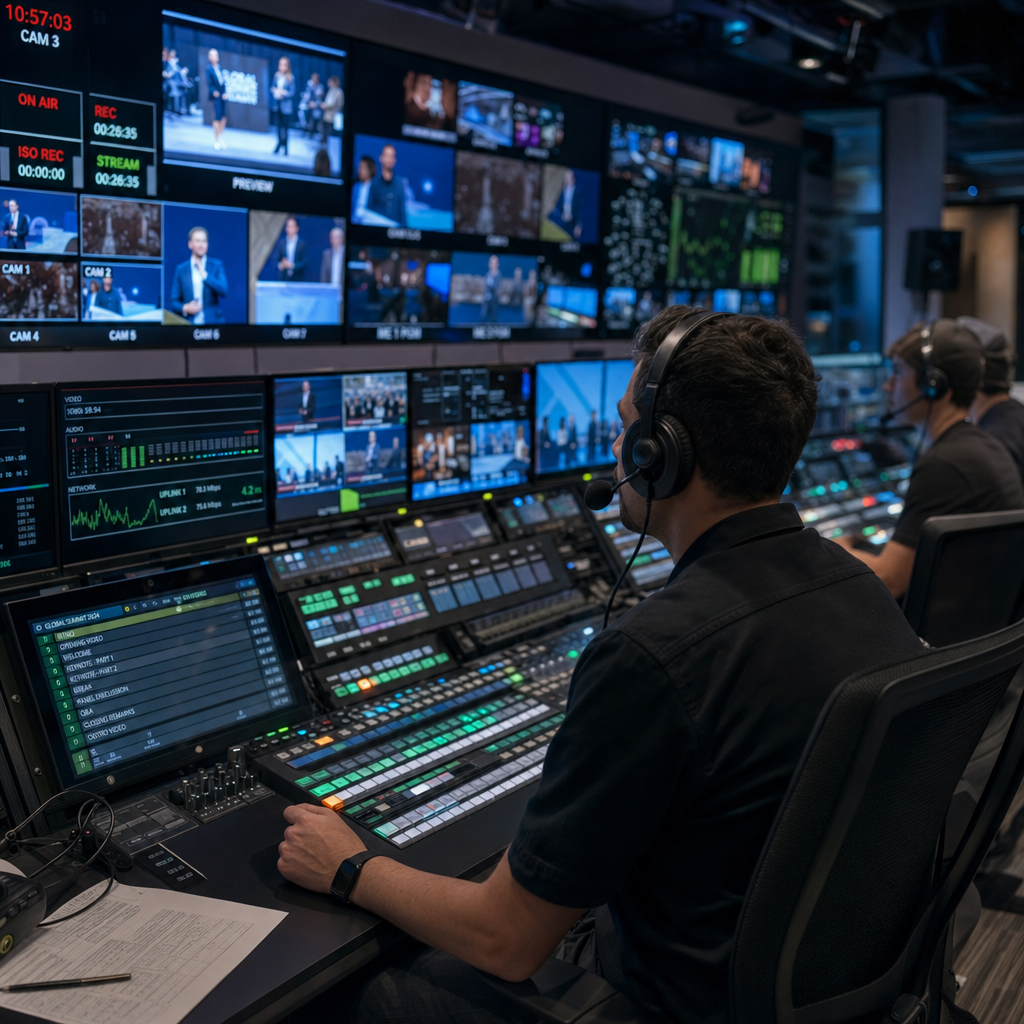
A standard international conference production requires a minimum of four to six camera positions, with dedicated operators, a vision mixer, and a production director managing the live cut in real time. For events with 500 or more attendees, plenary recordings, breakout session coverage, and executive interview setups run simultaneously. This is not a job for a two-person crew with a single gimbal.
International bodies specify camera formats in their technical briefs. 4K acquisition is increasingly standard. Some organizations require broadcast-quality output, which means specific codec and bitrate requirements that a production house must be able to meet with their existing kit, not by renting unfamiliar equipment the day before the event.
Live Streaming Infrastructure for Hybrid Events
Post-2020, virtually every international event has a virtual attendance component. The live streaming setup for a hybrid conference is materially different from a simple social media stream. It requires dedicated encoder hardware, redundant internet connections (wired primary, cellular backup), a streaming platform configured for the audience scale, and a technical producer whose sole responsibility is the stream rather than the camera coverage.
A common mistake is treating live streaming as an add-on that a camera operator manages between shots. International organizations that have experienced stream failures during high-profile events will specify streaming redundancy in their RFP as a technical requirement. Vendors who cannot describe their redundancy architecture in concrete terms fail this filter.
Pro tip: For any international event brief that includes hybrid attendance, prepare a dedicated streaming technical specification document that outlines your encoder models, CDN provider, backup connection method, and monitoring process. Attach it as a named appendix in your proposal.
Why Malaysia Is Emerging as a Serious Production Hub for Global Events
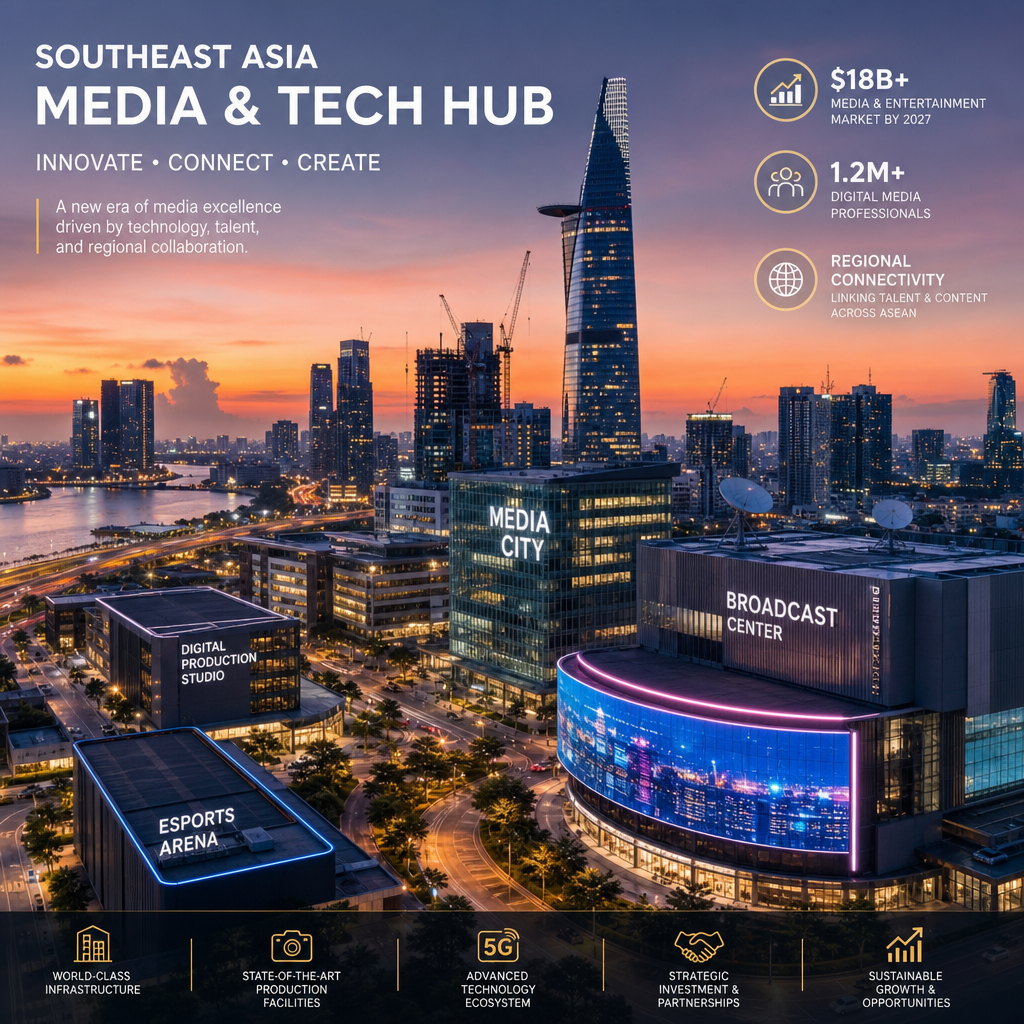
Malaysia’s positioning for international event production is stronger than most global procurement teams realize when they first begin their vendor search. Kuala Lumpur hosts the Kuala Lumpur Convention Centre, Axiata Arena, and a growing number of purpose-built conference facilities that meet the technical infrastructure requirements of major international events. Venue fiber connectivity, rigging points, and power capacity in these facilities remove significant production variables.
English is a working language of business and government in Malaysia, which reduces the communication overhead that affects production quality in some other regional markets. Crew members trained in English-language production documentation, call sheets, and shot lists operate more reliably in internationally coordinated events than crews who work primarily in a single local language.
Cost Efficiency Without Quality Compromise
According to Statista’s data on media production cost indices across Asia-Pacific markets, Malaysia sits below Singapore and Japan in crew and facility costs while maintaining comparable technical infrastructure in major urban venues. For organizations managing regional budgets, this represents meaningful savings on multi-day productions without requiring compromise on output quality.
A video production house Malaysia that understands international procurement can offer day rates and equipment packages that are genuinely competitive against Singapore or Hong Kong alternatives, while providing the same broadcast-quality deliverables. This is a real differentiator, not a marketing claim, when procurement teams are comparing proposals across three or four regional vendors.
The Integrated Services Advantage
International bodies prefer vendors who can manage the full production scope under a single contract. This means event coverage, live streaming, post-production editing, and content repurposing for brand and communications use cases should all be deliverable without sub-contracting introductions that multiply coordination risk. Malaysian production companies that have built integrated service capabilities, covering multi-camera production through to promotional video and explainer content delivery, are positioned to win the full scope rather than a portion of it.
“Organizations increasingly seek production partners who understand their communication objectives across the entire event lifecycle, from pre-event promotional content through to post-event highlights and thought leadership video assets.” – International Association of Professional Congress Organizers, production services guidance framework
Comparison of Procurement Approaches Used by International Organizations
| Procurement Approach | How It Works | What Vendors Need to Prepare |
|---|---|---|
| Open RFP (Request for Proposal) | Published publicly, any qualified vendor may submit. Evaluation is scored against technical and financial criteria. Common for UN agencies, development banks, and government-linked bodies. | Full compliance documentation, detailed technical proposal mapped to RFP criteria, itemized budget, client references, and signed declarations. Generic decks are disqualifying. |
| Shortlisted Vendor Panel | Organization maintains a pre-approved vendor list. Only panel members are invited to quote. Panel registration is a separate process requiring upfront qualification. | Proactive registration with procurement offices before an event need arises. Panel positions are competitive and require annual compliance renewal in many organizations. |
| Direct Negotiation with Prior Supplier | Used for repeat events or where the value is below a formal tender threshold. The incumbent vendor has significant advantage but must still demonstrate current capability and competitive pricing. | Relationship maintenance, post-event reporting that documents successful delivery metrics, and proactive capability updates when new equipment or services are added. |
What Corporate Event Planners Get Wrong When Briefing a Production House
The briefing process is where most corporate event productions either set up for success or plant the seeds of a difficult project. In practice, the briefs that create problems share common characteristics that experienced production teams recognize immediately.
Treating Production as a Single-Day Activity
A common mistake is scoping only the event day itself. Professional event video production for an international conference involves a pre-event phase covering venue recce, technical planning, equipment logistics, and crew briefing. It involves an on-site setup day before the event begins. And it involves a post-production phase that, for a full-day conference, can require two to three weeks of editing, color grading, captioning, and format export for different distribution channels.
Event planners who scope only the shoot day and then dispute post-production timelines create avoidable conflict. The production house brief should specify all three phases explicitly, with agreed deliverable lists and timelines attached.
Underspecifying the Deliverable Formats
International organizations distributing event content across their website, social channels, internal communications platforms, and partner networks need content in multiple formats and aspect ratios. A 16:9 conference highlight reel does not automatically become a 1:1 social post or a 9:16 mobile story without additional editorial work.
Marketing professionals who have managed international campaigns understand this. Those newer to production procurement frequently assume that the production house will deliver all variants within the quoted price. Specifying every deliverable format, duration, aspect ratio, and subtitle language requirement in the initial brief eliminates scope disagreements before they start.
Ignoring the Content Marketing Opportunity of Event Footage
HubSpot’s marketing research consistently reports that video content drives higher engagement rates across B2B channels than any other content format. Yet the majority of organizations that invest significantly in event production use the resulting footage only once, as a conference highlight reel, before the content is archived.
A well-structured content plan converts a single event’s footage into a promotional video for the next year’s event, an explainer video drawing on keynote content, speaker interview clips for thought leadership distribution, and short-form social cuts that extend the event’s reach for weeks after it concludes. Production houses that propose this content architecture upfront, rather than delivering footage and waiting for further instruction, deliver measurably more value to their clients.
Frequently Asked Questions
What makes a Malaysian production company competitive against Singapore or Hong Kong vendors for international event briefs?
Cost efficiency is the most immediate factor. Malaysian crew and facility day rates are typically 20 to 35 percent lower than equivalent Singapore rates, without a corresponding drop in technical capability for productions based in Kuala Lumpur. Beyond cost, Malaysian production companies that have built compliance documentation, international client references, and integrated service capabilities can match the proposal quality of Singapore vendors while offering a more competitive budget position. The critical requirement is that the Malaysian production house must be able to demonstrate international-standard output through documented case studies, not just claimed capability.
How far in advance do international organizations typically begin vendor selection for a major conference?
In practice, formal RFP processes for major international conferences are initiated three to six months before the event date. Organizations hosting annual flagship events often begin vendor engagement nine to twelve months out, particularly when the venue is being confirmed simultaneously. Production houses that approach international bodies only when an event is announced are almost always too late for the formal selection process. Building relationships through vendor panel registrations and proactive capability presentations is more effective than responding to published RFPs alone.
What compliance documents should a production house have ready before approaching international clients?
At minimum: a current public liability insurance certificate with a limit appropriate to the event scale (typically USD 1 million or above for large conferences), professional indemnity coverage, a written data privacy policy referencing the applicable legislation, and a health and safety policy for on-site crew. Organizations with European funding sources will also expect a written GDPR compliance statement. Having these documents in a single vendor credential pack that can be submitted within 24 hours of a request is a competitive advantage in itself, as many vendors delay at precisely this stage.
Do international bodies evaluate the creative quality of production work, or only technical and compliance factors?
Both. The evaluation process is typically staged. Compliance and technical capability are assessed first, with vendors who do not meet those thresholds eliminated before creative work is reviewed. Among technically qualified vendors, creative portfolio quality and the proposed visual and narrative approach for the specific project become decisive factors. The most common error in RFP responses is submitting strong creative samples with weak compliance documentation, which results in disqualification before the creative work is ever read. Get the compliance section right first, then differentiate on creative quality.
Can a single production house realistically deliver event coverage, live streaming, and post-production content repurposing under one contract?
Yes, and for international clients, this is the preferred model. Managing three separate vendors for event footage, streaming, and post-production multiplies coordination risk and creates accountability gaps when deliverables are missed. Integrated production companies that own all three capabilities internally can guarantee a unified quality standard across the full scope. When evaluating whether a production house genuinely integrates these services, ask specifically which elements are handled by in-house staff versus sub-contractors. A production company that sub-contracts its live streaming or post-production is not delivering an integrated service, regardless of how it is positioned in a proposal.
If you have managed the vendor selection process for an international event production in Asia, we would welcome your perspective on what criteria proved most important in the final decision.
References
- Asian Development Bank procurement and consulting services guidelines for service providers in the Asia-Pacific region
- HubSpot marketing statistics on video content performance across B2B channels
- Statista data on media production costs and market benchmarks across Asia-Pacific countries
- Forbes coverage of corporate event production trends and enterprise video marketing investment
- United Nations procurement guidelines and vendor registration requirements for event services