
Most croissants sold in Kuala Lumpur are not artisan croissants. They are factory-laminated, margarine-filled imitations that share only a shape with the real thing. If you have ever bitten into a croissant that felt dense, greasy, or bland, that is exactly what you experienced. The difference between a genuinely artisan croissant and a commercial one is not subtle. It is structural, technical, and immediately obvious to anyone who knows what to taste for. This guide breaks down precisely what separates real artisan croissants KL bakeries are proud to serve from the ones that simply look the part on an Instagram grid.
Table of Contents
- Quick Takeaways
- What Actually Makes a Croissant Artisan
- The Role of French Butter in Lamination
- Lamination, Layers, and the Technique Behind the Honeycomb
- French Butter Croissants in Malaysia: Why Climate Matters
- Artisan vs. Semi-Artisan vs. Commercial: A Direct Comparison
- What to Look For When Buying the Best Croissants in Kuala Lumpur
- Frequently Asked Questions
- References
Quick Takeaways
| Key Insight | Explanation |
|---|---|
| Butter fat content is non-negotiable | Genuine artisan croissants use high-fat European butter (minimum 82% fat), not margarine or standard cooking butter. The fat percentage directly affects flakiness and flavour depth. |
| 27 layers is the gold standard | Traditional French lamination produces 27 layers through three sets of folds (a tri-fold repeated three times). Fewer layers means less structure; more layers collapse the honeycomb. |
| Cold temperature control is everything | Dough must rest in refrigeration between each fold. In Malaysia’s heat, this step is even more critical and distinguishes trained bakers from those cutting corners. |
| Fermentation time determines flavour | A slow overnight cold ferment develops complex flavour. Same-day rushed dough produces a bread-like taste, not a croissant’s characteristic buttery tang. |
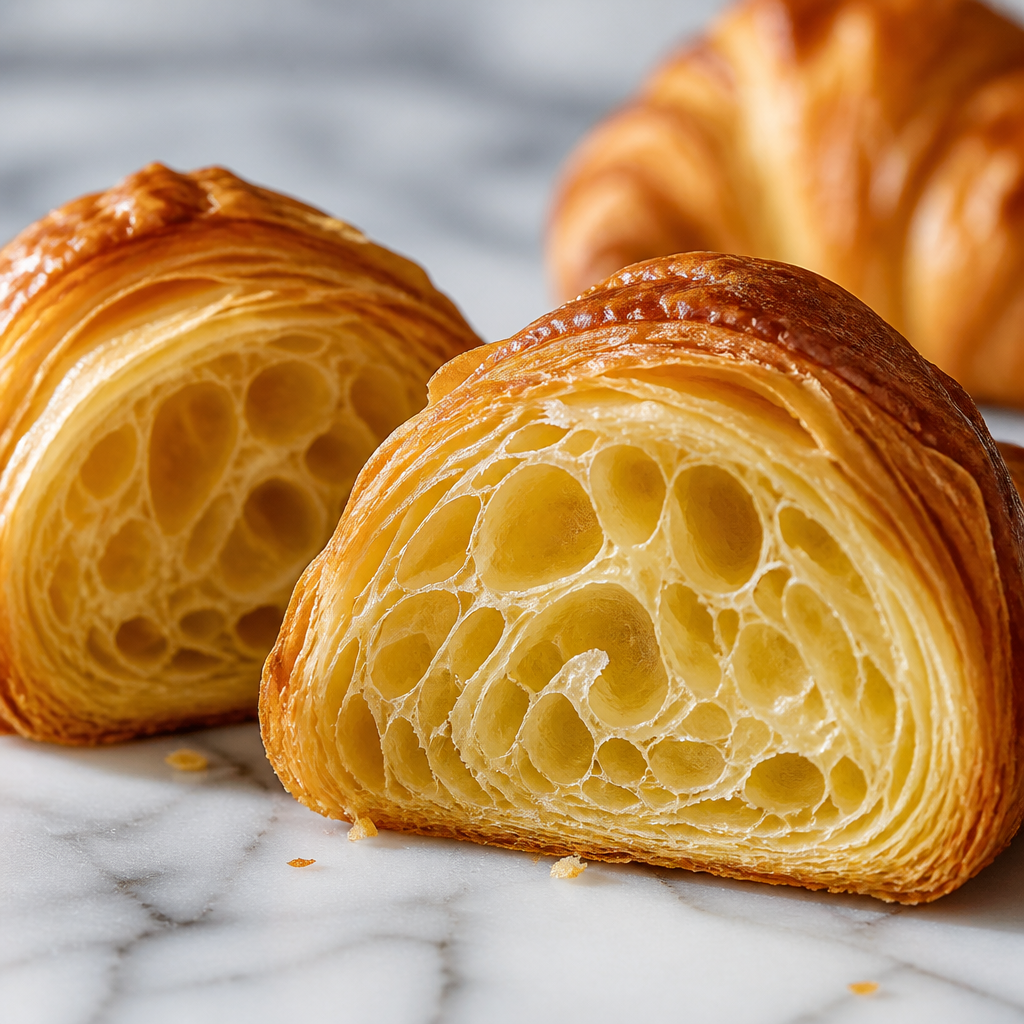
| The honeycomb interior is the proof | Tear a croissant open. A true artisan croissant shows an open, irregular honeycomb crumb. Compressed, doughy interiors indicate under-lamination or poor proofing. |
| Margarine is an immediate disqualifier | Margarine has a different melting point than butter and creates a waxy mouthfeel. Any bakery using margarine cannot legitimately call its product artisan. |
| Freshness window is narrow | A properly made butter croissant is best within four hours of baking. Same-day baking and pickup or delivery matters more for croissants than almost any other pastry. |
What Actually Makes a Croissant Artisan
The word “artisan” is used loosely in Malaysian food marketing, but when applied to croissants, it has a precise technical meaning. An artisan croissant is one where a trained baker controls every variable by hand: the dough hydration, the butter block preparation, the lamination folds, the proofing time, and the baking temperature curve. None of these steps are delegated to industrial machinery.
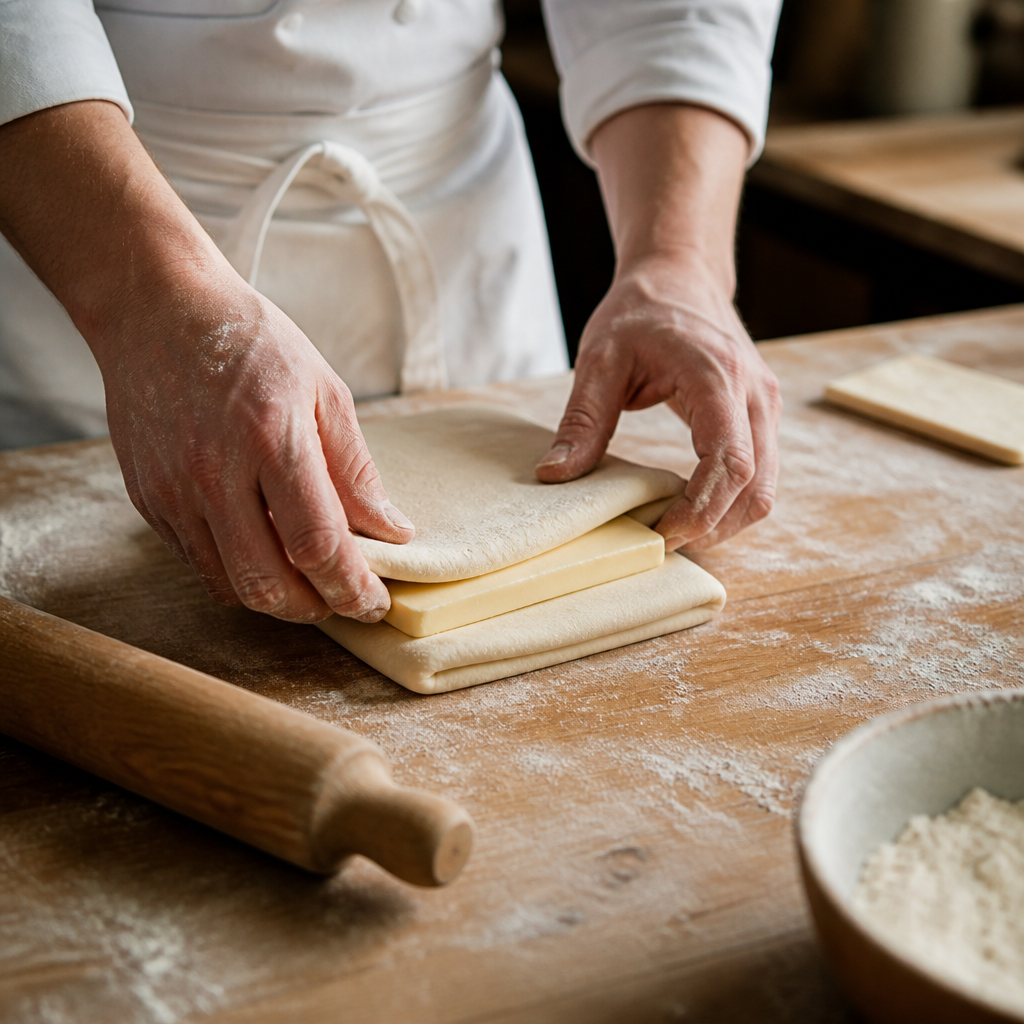
In practice, the defining factor is laminated dough made with real butter. Laminated dough is created by encasing a flat sheet of cold butter inside the dough and then folding and rolling the two together repeatedly. Each fold multiplies the layers of butter and dough, which during baking turn into the thin, shatteringly crisp sheets that define a proper croissant’s texture.
A common mistake is assuming that shape alone signals quality. Crescent-shaped pastries made from brioche-style dough or enriched bread dough are not croissants in any technical sense, regardless of what the label says. The croissant is specifically a laminated pastry, and that lamination is what makes it labour-intensive and genuinely artisan when done by hand.
Pro tip: When evaluating any bakery’s croissant claim, ask one question: do they laminate in-house? If the dough arrives pre-laminated from a supplier, the bakery is finishing, not crafting. That is a meaningful distinction for anyone serious about quality.
The Role of French Butter in Lamination
Not all butter performs equally in lamination, and the difference is not subtle. French butter, particularly AOP-certified varieties like Beurre de Charentes-Poitou or Beurre d’Isigny, contains at least 84% fat compared to the 80-82% typical of standard butter. That extra fat percentage is significant because water content in butter is the enemy of clean layers.
When butter contains higher water, it steams during baking and disrupts the thin dough layers rather than separating them cleanly. High-fat French butter stays pliable at cold temperatures, which means it folds without cracking inside the dough, producing even, unbroken layers that translate to consistent flakiness in the final bake.
Why Plasticity Matters More Than Fat Alone
Experienced pastry chefs look for butter with good plasticity, meaning the ability to bend and flex without shattering or smearing when cold. French butter made from cultured cream also carries a slightly tangy, complex flavour that adds depth to the finished croissant far beyond what a neutral-tasting standard butter delivers.
For French butter croissants Malaysia bakers produce, sourcing this butter is a genuine cost commitment. AOP-certified French butter imported into Malaysia costs significantly more than locally produced alternatives. Bakeries that absorb that cost and use it consistently are making a statement about priorities, and it shows in every bite.
“The quality of the butter is not an ingredient decision. It is a philosophical decision about what kind of baker you are.” – Chef Christophe Felder, renowned French pastry chef and author of Patisserie
Pro tip: If a croissant leaves a greasy residue on your fingers rather than a clean butter richness on your palate, the butter quality is the likely culprit. Margarine and low-grade butter have a higher melting point mismatch with dough, producing that unpleasant coating sensation.
Lamination, Layers, and the Technique Behind the Honeycomb
The lamination process is where most bakeries fail or succeed. The standard for a classic French butter croissant is 27 layers, achieved through three sets of letter folds (each fold creates three layers, compounded across three rounds). This is not a rigid rule, but it represents the point at which layer count, butter distribution, and structural integrity are all in balance.
The Fold Sequence and Why Resting Kills Shortcuts
Between each fold, the dough must rest in refrigeration for at least 30 minutes, often longer. This resting period allows the gluten to relax so the dough can be rolled without springing back, and it keeps the butter cold and firm so it stays as a distinct layer rather than blending into the dough. In Malaysia’s ambient temperature of 30 to 34 degrees Celsius, this is not optional. Skip the resting period and the butter melts into the dough, destroying the lamination entirely.
After shaping, croissants must proof at a controlled temperature, typically around 26 to 27 degrees Celsius with controlled humidity, for two to four hours. This proofing stage allows the dough to puff up while keeping the butter layers intact. Over-proofed croissants collapse in the oven. Under-proofed ones have no lift and stay dense.
Reading the Honeycomb as a Quality Indicator
The interior honeycomb structure is the most reliable indicator of technique. A well-laminated, properly proofed croissant will show large, irregular air pockets separated by thin, translucent dough membranes when torn open. This open crumb is created when steam from the butter forces layers apart during baking. A compressed, uniform interior without distinct pockets indicates either poor lamination, insufficient proofing, or baking at too low a temperature.
French Butter Croissants in Malaysia: Why Climate Matters
Making genuinely good croissants in France is difficult. Making them in Malaysia requires solving all the same problems plus one significant additional challenge: heat. Malaysia’s year-round heat and high humidity are directly hostile to laminated pastry production. Butter softens and bleeds into dough at ambient room temperature, the lamination collapses, and the result is a pastry that resembles a croissant but has none of the textural characteristics.
Bakeries that produce exceptional French butter croissants Malaysia customers can rely on invest heavily in cold infrastructure. This means walk-in chillers, marble-topped work surfaces that stay cold, and a production workflow where dough is never out of refrigeration for longer than it takes to complete one fold and roll.
Why This Makes Malaysian Artisan Croissants More Impressive, Not Less
A French pastry chef working in Paris has the climate working with them during cooler months. A Malaysian baker producing the same quality croissant is working against ambient conditions every single day. The technical discipline required is higher, not lower. When you find a KL bakery producing genuinely excellent croissants, that achievement reflects serious training and rigorous process control.
This is also why freshness matters so intensely for croissants in Malaysia. The butter that provides the croissant’s flavour and texture begins to change from the moment the croissant comes out of the oven. Humidity in Malaysia accelerates the softening of the exterior crust. A croissant that is perfect at 9am is noticeably less so by 2pm. Same-day production with same-day delivery or pickup is not a marketing claim for serious bakeries. It is a functional requirement.
Artisan vs. Semi-Artisan vs. Commercial: A Direct Comparison
Understanding where a croissant sits on this spectrum helps set accurate expectations. The table below uses the three production approaches found across KL’s pastry scene and compares them across the factors that determine quality.
| Factor | Artisan (Fully In-House) | Semi-Artisan (Par-Baked Base) | Commercial (Factory Produced) |
|---|---|---|---|
| Butter type | High-fat French or European butter (82%+ fat) | Variable, often standard butter or blend | Margarine or vegetable shortening |
| Lamination | Hand-laminated in-house, 27 layers | Pre-laminated dough from supplier, finished in-house | Machine-laminated at factory |
| Fermentation | Overnight cold ferment, 12-18 hours | Partial fermentation, varies by supplier | Rapid or no fermentation |
| Texture | Shattering crust, open honeycomb crumb | Decent exterior, denser crumb | Soft, uniform, no distinct layers |
| Flavour | Complex, buttery, slight tang from fermentation | Mild, acceptable but flat | Neutral to artificial, waxy aftertaste |
| Freshness window | Best within 4 hours of baking | Best within 6-8 hours | Designed for 2-5 day shelf life |
| Price point (KL market) | RM 8 to RM 15 per piece | RM 5 to RM 8 per piece | RM 2 to RM 4 per piece |
The price difference is a reliable but not infallible guide. A croissant priced at RM 12 in KL is not automatically artisan, but a croissant priced at RM 3 almost certainly is not. The cost of French butter, the labour time involved in proper lamination, and the infrastructure required to maintain cold temperatures make cheap artisan croissants a mathematical impossibility.
What to Look For When Buying the Best Croissants in Kuala Lumpur
If you are trying to identify genuinely good croissants among KL’s growing pastry scene, there are five concrete tests that require nothing more than your eyes, hands, and palate.
The Visual Test
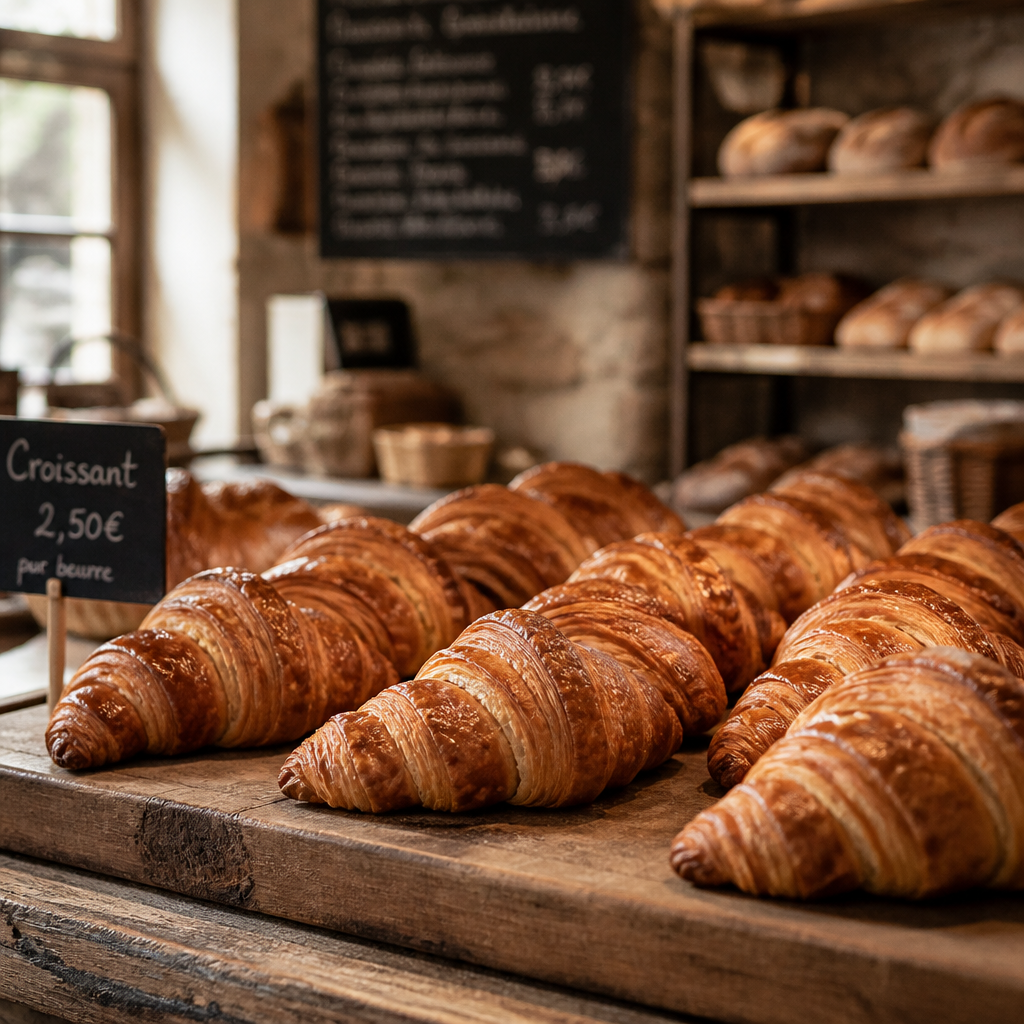
Look at the colour. A proper croissant should be deep amber to mahogany brown on the exterior, not pale gold or uniformly light. The layers on the sides should be visible as distinct ridges. The shape should curve slightly at the tips if it is a traditional crescent, or be a straight baton if it is a straight-style French croissant. Both are legitimate. Both should show visible lamination lines.
The Tap and Tear Test
Tap the base gently. A well-made croissant sounds slightly hollow. Now tear it open (do not cut it). The interior should pull apart in layered strands, revealing open, irregular air pockets. If it tears like bread with a uniform dense crumb, the lamination has failed somewhere in production.
The Palate Test
Taste it without butter or jam first. A genuine artisan croissant KL bakers make with French butter should be rich, slightly complex, and leave a clean dairy finish. A waxy, greasy coating on the roof of your mouth or a flat, bread-like taste indicates margarine or low-quality butter.
At Petite Serie Desserts, the croissants and Danish pastries are made using exactly this standard. The lamination is done in-house, the butter is selected for fat content and flavour, and the production schedule is built around same-day freshness because anything else would compromise the result. For anyone looking for the best croissants in Kuala Lumpur with the quality markers described above, this is where that standard is met.
The same attention to ingredient quality that defines their croissant production extends across their full range, from celebration cakes to petit fours, because the philosophy of not cutting corners does not turn off between pastry categories.
Frequently Asked Questions
What is the difference between an artisan croissant and a regular croissant?
An artisan croissant is hand-laminated in-house using high-fat butter, slow-fermented dough, and precise temperature control at every stage. A regular or commercial croissant uses machine lamination, often with margarine, and prioritises shelf life over flavour and texture. The difference is immediately apparent in the flakiness of the exterior and the open honeycomb interior.
Why are good croissants in Malaysia more expensive than in France?
French butter must be imported, adding cost. Malaysia’s heat requires greater cold infrastructure investment than European kitchens need. And the labour time for proper hand lamination, including multiple refrigeration resting periods, is substantial. A fairly priced artisan croissant in KL reflects all of these real costs, not inflated margins.
How do I know if a croissant uses real butter or margarine?
The clearest indicator is mouthfeel. Butter leaves a clean, dairy-rich finish that dissipates quickly. Margarine leaves a waxy, oily coating on the palate that lingers. You can also ask the bakery directly about their butter sourcing. A confident answer naming a specific butter and its fat percentage is a good sign. Vague answers are a warning.
How long does an artisan croissant stay fresh in Malaysia’s climate?
A properly made butter croissant is best within three to four hours of baking in Malaysia’s humidity. The exterior crust, which should shatter when bitten, begins softening as moisture from the air penetrates the layers. Storing a croissant in a sealed container accelerates this. If you cannot eat it immediately, a brief warm in a dry oven at 170 degrees Celsius for four to five minutes restores much of the original texture.
What is a Danish pastry and how does it differ from a croissant?
Both are laminated pastries made with butter, but Danish pastry dough contains eggs and more sugar, producing a richer, slightly softer result. Croissant dough is leaner, relying on the butter lamination alone for its texture, which is why the exterior is crisper and the layers more pronounced. Danish pastries typically carry sweet or fruit-based fillings; croissants are traditionally served plain or lightly filled.
Are there any Malaysian-flavoured artisan croissants, and are they authentic?
Yes, and they can be genuinely excellent when done with proper technique. A croissant filled with pandan cream or kaya preserves the artisan standard as long as the lamination and butter quality are not compromised. The Malaysian flavour is in the filling or glaze, not in the pastry structure itself. The structural standards described in this article apply regardless of flavour direction.
Where can I find same-day artisan croissants with delivery in KL?
Petite Serie Desserts offers same-day pickup and delivery in KL and Selangor, which is the correct service model for croissants given how narrow their freshness window is. Ordering from a bakery that bakes to order or bakes daily and delivers the same day is the only reliable way to receive a croissant in the condition it was intended to be eaten.
Have you found a croissant in KL that genuinely surprised you with its quality, or had one that completely missed the mark? Share what you noticed about it and why it stood out.
References
- Forbes coverage of global artisan food trends and premium bakery market growth
- Statista data on bakery and pastry market size in Southeast Asia
- ScienceDirect research on fat content, butter plasticity, and laminated dough performance in baking science
- Institute of Food Science and Technology resources on pastry lamination, fermentation, and dough rheology
- MDPI open-access food science journal articles on croissant quality parameters and sensory evaluation