
Malaysian brands are sitting on an uncomfortable truth: video content marketing Malaysia is no longer a “nice to have” budget line item. It is the primary driver of purchase decisions, brand recall, and organic reach across every major platform that your buyers use daily. HubSpot’s 2024 marketing data reports that 91% of businesses use video as a marketing tool, and yet a significant portion of Malaysian corporates still treat video as a one-off project rather than a sustained strategic asset. That gap is exactly where your competitors will beat you in H2 if you do not act now.
Table of Contents
- Why H2 Is the Critical Window for Malaysian Brands
- Quick Takeaways
- What Video Content Marketing Actually Means for Corporate Malaysia
- Building a Brand Video Strategy That Delivers Measurable Returns
- Corporate Video Production Malaysia: Choosing the Right Format for the Right Goal
- Live Streaming and Event Coverage as Permanent Content Assets
- Comparing Video Approaches: Which Format Wins for Malaysian Corporates
- Common Mistakes Malaysian Brands Make with Video Marketing
- Frequently Asked Questions
- References
Why H2 Is the Critical Window for Malaysian Brands
The second half of the calendar year is where Malaysian corporate budgets either justify themselves or get cut for the next cycle. Q3 and Q4 carry the heaviest event calendars, the most active procurement cycles, and the highest consumer spending periods, anchored by Merdeka Day, Malaysia Day, and the year-end festive season. Brands that have video assets ready to deploy in this window capture disproportionate attention compared to those scrambling to produce content reactively.
In practice, the brands that invest in video content marketing Malaysia before H2 peaks are the ones whose campaigns compound. A brand film produced in July is still earning views and building trust in December. A corporate event covered with professional multi-camera production in August becomes a recruitment asset, a sales deck asset, and a social proof asset simultaneously.
The window to prepare is shorter than most marketing managers assume. Professional production with proper pre-production, filming, and post-production typically requires four to eight weeks. If you are reading this and have not briefed a production partner, the clock is already running.
Quick Takeaways
| Key Insight | Explanation |
|---|---|
| Video drives purchase decisions more than any other content format | Wyzowl’s 2024 State of Video Marketing report found that 82% of people have been convinced to buy a product or service after watching a brand video. |
| H2 events are your highest-ROI video production moments | Corporate events, product launches, and annual conferences in Q3 and Q4 produce footage that serves marketing, sales, HR, and PR simultaneously when covered professionally. |
| One-off videos are a waste of production budget | A single event or brand film should be cut into multiple formats: full-length, 60-second, 15-second, and vertical social cuts. If your production partner does not offer this, you are leaving value behind. |
| Live streaming extends your event’s reach by orders of magnitude | A physical event with 200 attendees paired with a professional live stream can reach thousands of stakeholders, investors, and potential customers who could not attend in person. |
| Brand video strategy must align with business objectives, not just views | Views are a vanity metric unless tied to lead generation, brand lift, or sales pipeline. Define success metrics before production begins, not after. |
| Corporate video production Malaysia quality gap is real and costly | Low-quality production signals low-quality products to B2B buyers. Malaysian procurement officers and regional stakeholders make trust judgments based on production value within seconds. |
| Explainer and promotional videos shorten the B2B sales cycle | A well-produced explainer video on your website reduces the number of sales calls needed to move a prospect from awareness to consideration, directly reducing cost per acquisition. |
What Video Content Marketing Actually Means for Corporate Malaysia
There is a persistent misconception in Malaysian corporate circles that video content marketing means posting clips on social media. That is one small slice of a much larger picture. Video content marketing is the systematic use of video assets across every stage of the buyer journey: awareness, consideration, decision, and retention.
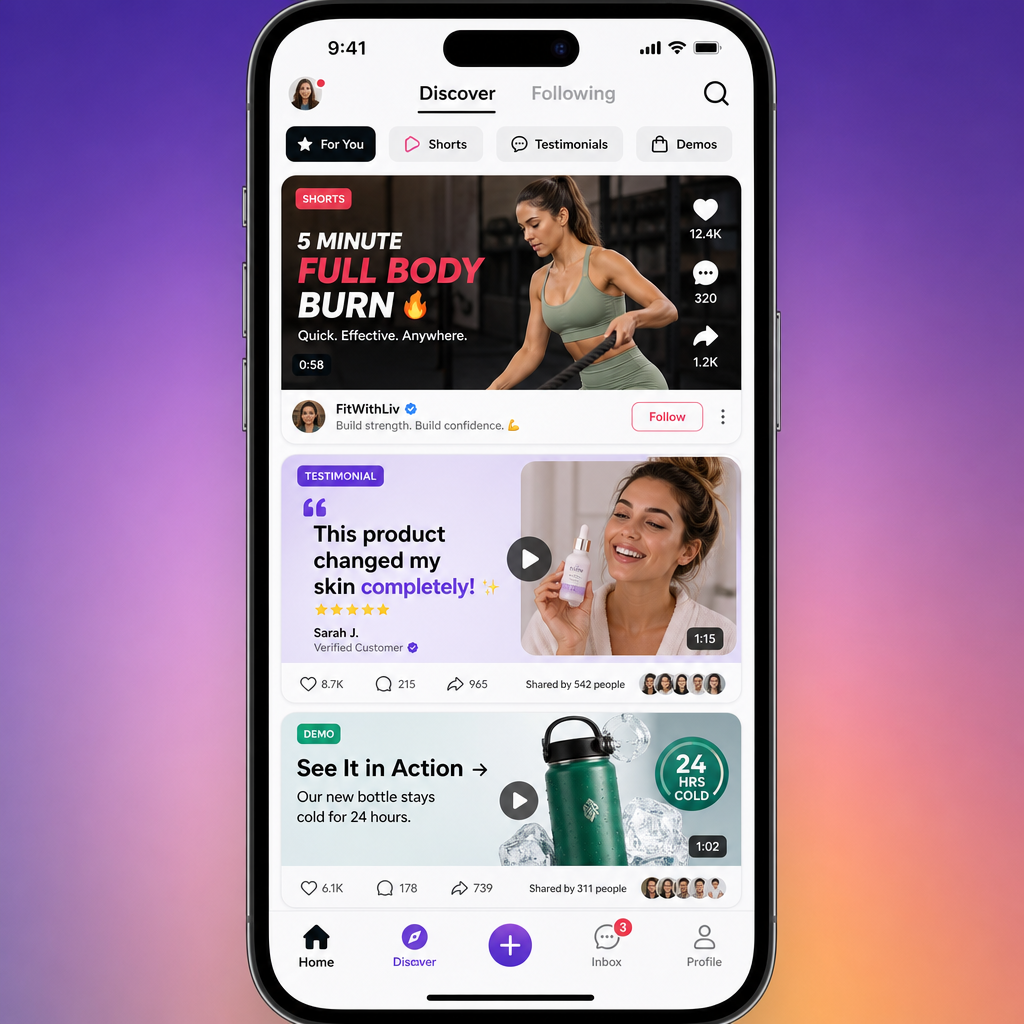
For a corporate organization, this means your homepage carries a brand film. Your sales team sends proposal-stage explainer videos instead of lengthy PDFs. Your HR department uses company culture videos to attract talent. Your event team live streams conferences to extend reach beyond the physical venue. Every one of these applications requires intentional planning, not reactive production.
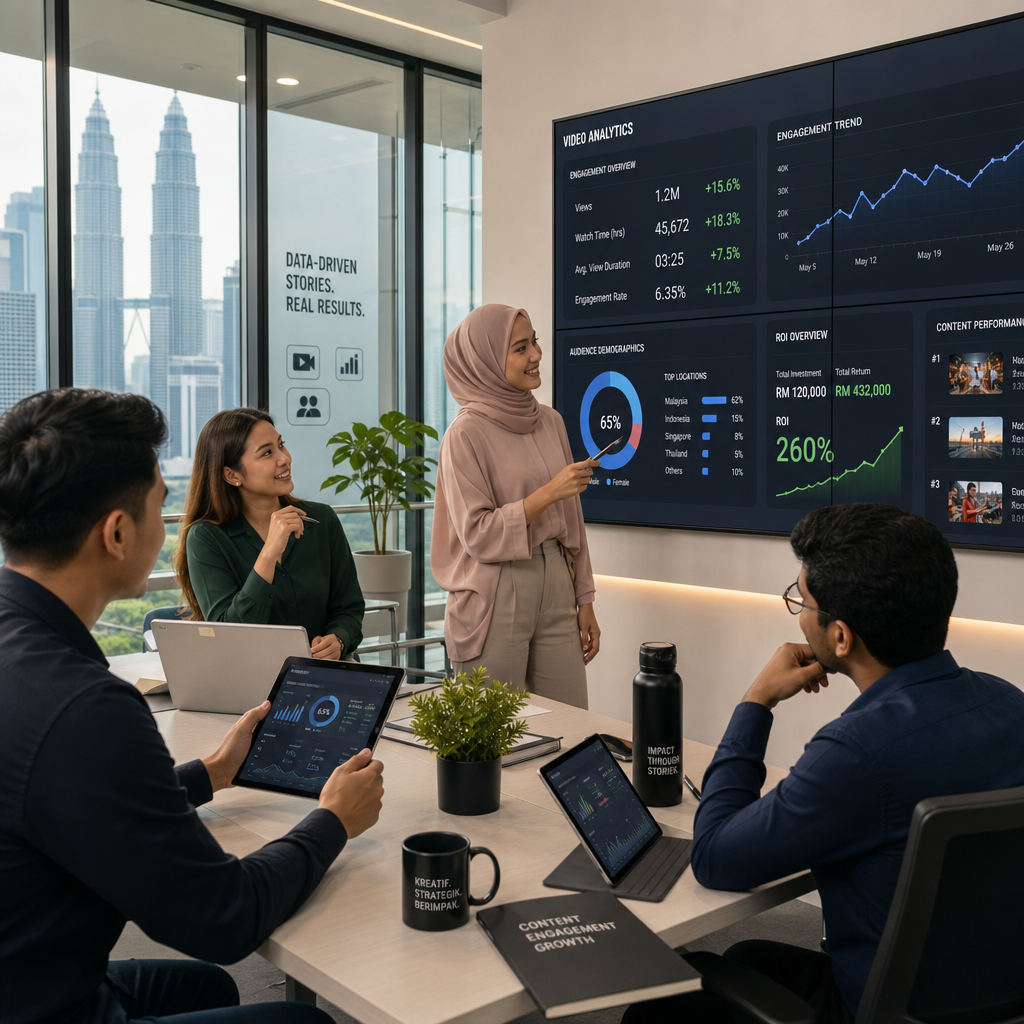
The data consistently shows that companies treating video as an integrated communication tool outperform those using it as a sporadic marketing tactic. According to Aberdeen Group research cited by HubSpot, companies using video grow revenue 49% faster than those that do not. For Malaysian brands competing regionally across ASEAN markets, that growth differential is not marginal, it is market-defining.
Pro tip: Before briefing any production house, map every touchpoint in your buyer journey and identify which ones currently have no video asset. Those gaps are your highest-priority production targets for H2, not another generic brand film that sits on your homepage.
Building a Brand Video Strategy That Delivers Measurable Returns
A common mistake is confusing production activity with strategy. Producing three videos this quarter is not a strategy. A brand video strategy defines what business problem each video solves, where it will be distributed, who the specific audience is, and how success will be measured before a single frame is shot.
Define the Business Problem First, the Video Format Second
Too many marketing managers brief production companies with a format in mind: “We want a 2-minute brand film.” The right starting point is the opposite: “We are losing deals at the proposal stage because prospects do not understand our service differentiation. What video format solves that?” The answer might be a 90-second explainer video placed inside your sales email sequence, not a brand film at all.
In practice, aligning the video brief to a specific business problem produces better creative output, clearer production briefs, and measurable results that justify the next production cycle.
Distribution Planning Is Not Optional
The production budget conversation always dominates, but distribution planning determines whether the production budget was well spent. A corporate video produced for LinkedIn requires different framing, pacing, and subtitle treatment than the same content published on YouTube or embedded in a pitch deck. If your production partner does not ask about distribution in the briefing stage, that is a red flag.
“The biggest waste in corporate video is not bad production. It is good production that no one sees because distribution was an afterthought.” – Common finding across brand video audits conducted by digital marketing practitioners in the ASEAN region.
Set KPIs That Connect to Revenue, Not Just Reach
Reach and views tell you about exposure. What actually matters for a corporate brand is whether video content is shortening sales cycles, increasing proposal conversion rates, improving event registration, or reducing support queries through explainer content. These are the metrics that get video budgets approved and expanded in the next planning cycle.
Pro tip: Build a simple before-and-after measurement framework. Track your average sales cycle length, proposal conversion rate, or event attendance for one quarter before introducing video assets, then compare the same metrics one quarter after. This gives you concrete data to present internally when justifying production investment.
Corporate Video Production Malaysia: Choosing the Right Format for the Right Goal
Corporate video production Malaysia covers a wide range of formats, and selecting the wrong one for your objective wastes budget and produces content that underperforms. The Malaysian market has specific characteristics worth accounting for: multilingual audiences, regional distribution across Peninsular and East Malaysia, and a B2B buying culture that values credibility signals heavily.
Brand Films for Top-of-Funnel Awareness
Brand films are the most expensive format and the most misused. They work when they communicate a clear brand story that differentiates you from competitors, not when they simply show your office and staff smiling. A brand film for a Malaysian professional services firm should address the viewer’s specific anxieties: reliability, expertise, and regional capability. Generic aspiration does not convert.
Explainer Videos for Mid-Funnel Conversion
Explainer videos are the highest-ROI format for most Malaysian B2B organizations because they directly address the question every prospect is asking: “How does this actually work, and why should I trust you with it?” A well-scripted 90-second to 2-minute explainer placed at the right moment in your sales funnel can replace three sales calls. That is a quantifiable cost saving.
Promotional Videos for Campaign-Specific Goals
Promotional videos tied to specific campaigns, product launches, or seasonal events have a defined shelf life and should be produced with that in mind. The production scope should match the campaign duration. A six-week promotional campaign does not require the same production investment as an evergreen brand asset. Mismatching budget to shelf life is a common planning error in Malaysian corporate marketing teams.
Live Streaming and Event Coverage as Permanent Content Assets
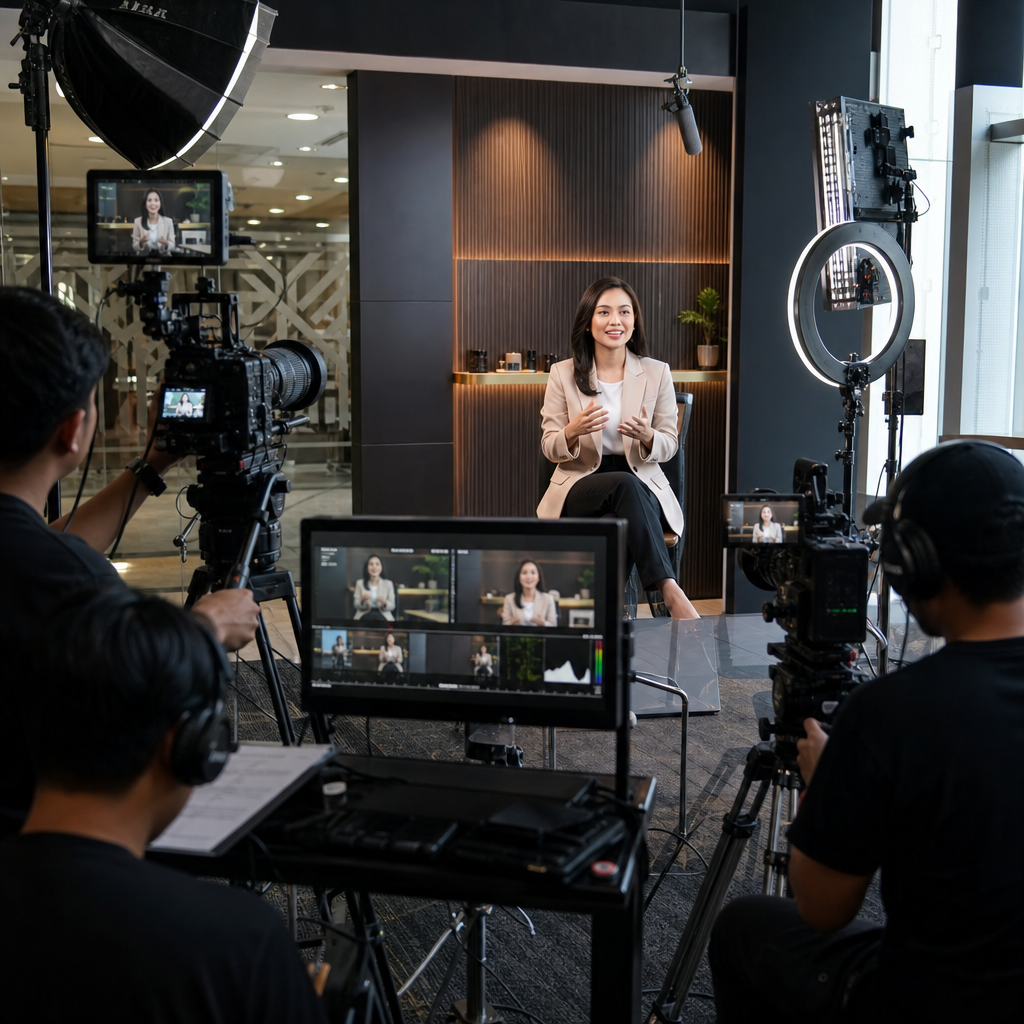
Malaysian corporates running annual conferences, product launches, townhalls, or industry summits are sitting on one of the most underutilized content opportunities available to them. A professionally produced live stream does not just serve the virtual audience on the day. It produces a permanent content asset that can be edited into keynote highlights, speaker clips, promotional teasers for next year’s event, and internal training materials.
The calculation changes significantly when you think about event coverage this way. The cost of professional multi-camera live streaming is not just the cost of reaching remote attendees. It is the cost of producing months of content assets from a single production engagement. Organizations that have made this shift report dramatically better content output per ringgit spent on production.
A common mistake is treating live streaming as a technical function rather than a content strategy decision. Who operates the stream, how the cameras are positioned, whether there is a proper audio setup, and how the recorded output will be used afterward are all content decisions that need to be made before the event, not on the day.
Comparing Video Approaches: Which Format Wins for Malaysian Corporates
| Video Approach | Best Use Case for Malaysian Brands | Primary Limitation |
|---|---|---|
| Single brand film (one-time production) | Establishing brand credibility with a new audience segment or entering a new market | Limited shelf life if brand positioning evolves; no ongoing content pipeline |
| Event coverage with multi-camera production | Annual conferences, product launches, award ceremonies, investor days | Requires advance planning and production brief; reactive bookings compromise quality |
| Integrated video content program (ongoing production retainer) | Brands with a consistent content calendar, active social channels, and a clear buyer journey | Higher upfront commitment; requires internal stakeholder alignment on content approval processes |
The integrated program approach consistently outperforms one-off productions for brands with a twelve-month marketing horizon. The reason is simple: video content compounds. Each asset builds on the brand equity established by the previous one, audiences become familiar with your visual identity and tone, and the production team develops a deep understanding of your brand that reduces briefing time and revision cycles.
Common Mistakes Malaysian Brands Make with Video Marketing
After observing how Malaysian corporate clients approach video production, several patterns of underperformance emerge consistently. These are not production quality issues. They are strategic planning failures that even well-resourced marketing teams make.
Briefing Too Late for H2 Events
The single most expensive mistake is contacting a production company two weeks before a major event. Professional multi-camera production, live streaming infrastructure, and event coverage require pre-production: site visits, equipment planning, crew scheduling, and director briefings. Brands that book late get rushed production, which directly affects output quality and the usability of the content afterward.
Ignoring the Post-Production Content Plan
Most Malaysian corporate video briefs specify what needs to be filmed but say nothing about how the footage will be cut, formatted, and distributed afterward. This is backwards. The post-production plan should drive the production plan. If you need a 15-second Instagram cut, a 60-second LinkedIn version, and a 3-minute full-length, the director needs to know this before calling action on day one.
Measuring the Wrong Outcomes
View counts on a corporate video mean almost nothing in isolation. A corporate explainer video that generates 500 views but converts 40 of those viewers into qualified sales meetings has delivered far more value than a brand film with 50,000 views and zero downstream commercial impact. Define what conversion looks like for each video asset before production begins.
Pro tip: Ask your production partner to build UTM tracking into every video distribution plan from day one. This connects video views directly to website traffic, form submissions, and sales pipeline entries, giving you attribution data that makes the next budget conversation straightforward.
Frequently Asked Questions
How much does corporate video production in Malaysia typically cost?
Costs vary significantly based on scope, but Malaysian corporate brands should budget between RM 8,000 and RM 50,000 for a single professionally produced brand or explainer video, depending on script complexity, location requirements, talent, and post-production deliverables. Event coverage with live streaming is typically scoped separately based on venue size, number of cameras, and duration. The more important question than total cost is cost per outcome: what does this video need to generate to justify the investment, and is the production scope aligned to that goal.
What is the difference between a promotional video and a brand film?
A promotional video is campaign-specific and time-bound. It exists to drive a specific action during a defined period, such as event registrations, product sales, or service inquiries tied to a seasonal campaign. A brand film is an evergreen asset that communicates who you are, what you stand for, and why your audience should trust you. Both serve different purposes and should not be conflated in production briefs or budget planning.
How long does it take to produce a corporate video in Malaysia?
A realistic production timeline for a professionally executed corporate video runs four to eight weeks from brief to final delivery. This includes pre-production such as scripting, storyboarding, and location scouting; a production day or days; and post-production including editing, motion graphics, color grading, sound design, and revision rounds. Brands that compress this timeline by booking late consistently report lower satisfaction with the final output and more costly revision cycles.
Is live streaming worth the investment for a corporate event in Malaysia?
Yes, and the case is stronger than most event planners realize. Professional live streaming does two things simultaneously: it extends your event’s reach to stakeholders who cannot attend physically, which is particularly relevant for organizations with staff or clients across Malaysia and the region, and it produces a permanent recorded asset that can be repurposed long after the event ends. The incremental cost of professional live streaming relative to the content output it generates makes it one of the highest-ROI additions to any event production budget.
How do I measure the ROI of video content marketing for a B2B brand?
Start by tying each video asset to a specific stage of your sales funnel and defining one primary conversion metric for each. For awareness-stage content, track brand search volume and inbound inquiry volume in the weeks following publication. For consideration-stage explainer videos, track time-on-page for pages where they are embedded and measure whether sales cycle length changes. For proposal-stage video assets, track proposal conversion rates before and after introduction. Aggregate these metrics quarterly and you will have a defensible ROI model that connects production spend to commercial outcomes.
Should Malaysian brands produce video content in Bahasa Malaysia, English, or both?
This depends entirely on your audience segment, not on a default language preference. B2B brands targeting Malaysian government-linked companies and domestic procurement officers benefit from Bahasa Malaysia primary versions. Brands positioning for regional ASEAN expansion or targeting multinational clients based in Malaysia should lead with English. The practical answer for most Malaysian corporates is to produce a primary version in the language that matches the buyer’s preferred communication style and subtitle or voice-over the alternative. This is a distribution decision that needs to be made before production, not as an afterthought during post-production.
If you are currently planning your H2 content calendar or upcoming corporate events, share what your biggest video marketing challenge is in your organization below, because the strategies that work vary significantly depending on whether you are starting from zero or optimizing an existing program.
References
- HubSpot Marketing Statistics: video marketing benchmarks, ROI data, and content performance research used by practitioners globally
- Statista: digital media consumption statistics, video platform usage data, and APAC digital marketing trends
- Forbes: business strategy perspectives on video content investment, brand marketing, and corporate communications
- Ahrefs Blog: content marketing performance data, organic search behavior, and video SEO research
- Moz Learn SEO: how video content affects search visibility, dwell time, and organic ranking signals